What a fascia ring can honestly promise you (and what to ignore in the ads)
It's 10:15 and you're in bed, scrolling. Third fascia ring ad tonight. This one has a dramatic before-and-after, a countdown timer and "87% OFF, ENDS TONIGHT." The comments are half heart-eyes, half "scam?".
You put the phone down. You would honestly like something for your legs. You just don't want to be fooled again.
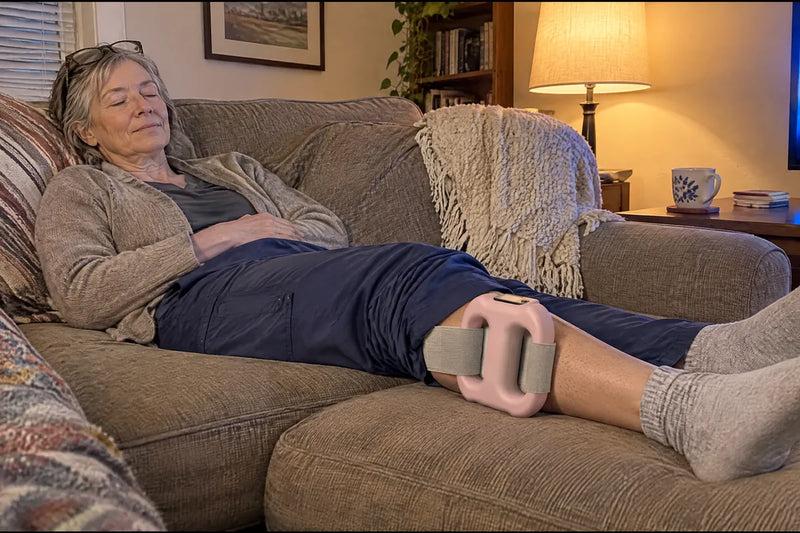
A fascia ring is a vibrating massager shaped like a ring that you strap onto your calf, thigh, arm or lower back and wear while you rest. It can help tight muscles and fascia loosen up after a long day, leave your legs feeling rested and help you relax before bed. It won't change how your body looks, and it doesn't treat or cure medical conditions.
What is a fascia ring?
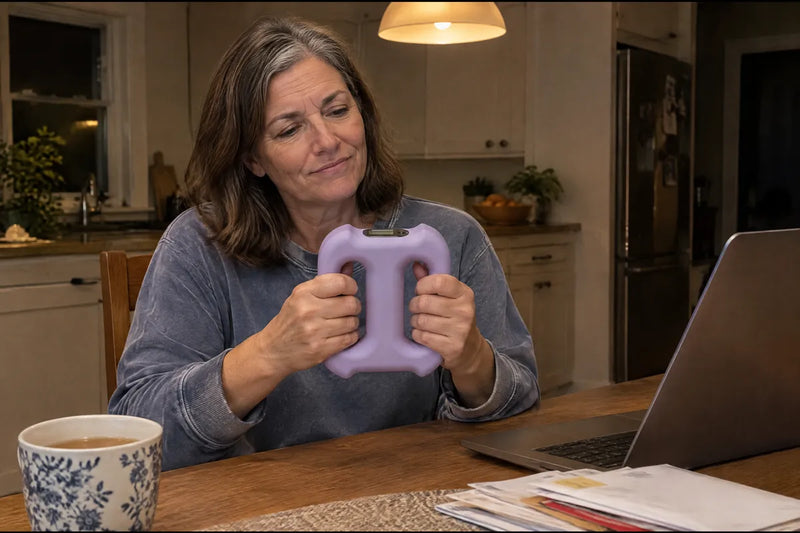
"Fascia ring" is the name people search for a small, wearable vibrating massager. Ours, the Evenhour ring, is a soft-cornered square with two openings. An adjustable strap goes through the openings, so the ring stays on the spot while you lie back. It has 8 vibration levels, a small LCD on top and USB-C charging. You can also hold it by the openings like a handle.
The idea is old and good: let something else do the work while you rest. What changed is that you can now wear it instead of holding it.
What it can do
- Help tight muscles and the fascia around them loosen after hours of standing or sitting.
- Support muscle recovery. Controlled studies found vibration reduced soreness in the days after hard exercise; we break them down in what the research says.
- Leave your legs feeling rested and lighter at the end of the day.
- Help you relax and switch off before bed.
- Stay put, hands-free, so you actually use it on tired nights.
What it won't do
- Change your body. It's a massager for recovery and relaxation. Any ad that shows a different-looking body after a few weeks is selling something a massager can't deliver.
- Treat or cure a medical condition. It isn't a medical device and doesn't replace your doctor or physical therapist.
- Pound like a massage gun. It's a steady vibration, on purpose.
The big-promise version of this product is older than you think. In the 1950s, vibrating belt machines were sold with the promise of results in 15 minutes a day while you read, watched TV or napped, according to the Kansas Historical Society [1]. The relaxing part was always true. The rest is why people still roll their eyes at vibrating gadgets.
Red flags in fascia ring ads
- Before-and-after photos of bodies. A massager helps how you feel, not how you look in a photo.
- "Doctor recommended" with no doctor named. If there's a real endorsement, there's a real name.
- Countdown timers that restart when you reload the page, and "sale ends tonight" every night.
- Giant crossed-out prices from a "regular price" nobody ever paid.
- Photos that don't match each other, with different shapes, buttons or colors across the same listing.
- "No pain, no gain" language. Bruising is not proof something works. In 2017, BuzzFeed News reviewed 62 injury and malfunction reports sent to the FDA about one popular fascia tool [2].
The opposite of each red flag is a green one: real names, real photos, fixed prices, honest limits.
Why we sell the smaller promise
Our ring promises one thing it can keep: you'll lie down, and tight muscles and fascia will get help letting go of the day. That's less exciting than a miracle. It's also true every single night, which is more than the big promises can say.
The other half of trust is the store itself, so we wrote a checklist for that: how to tell if an online massager store is legit.
Questions people ask
Do fascia rings actually work?+
For what they're designed to do, yes. A fascia ring's steady vibration helps tight muscles and fascia loosen and supports recovery while you rest. It won't change how your body looks or treat medical conditions.
What's the difference between a fascia ring and a massage gun?+
A massage gun is a handheld percussion tool you hold and aim. A fascia ring is a wearable vibrating massager you strap on and leave in place while you rest.
Is a fascia ring safe to use?+
For most healthy adults, used as directed, yes. Start on a low level, use it 10 to 15 minutes per spot, and check with your doctor first if you're pregnant, have a pacemaker or implanted device, a clotting condition or any medical condition.
How do I use a fascia ring?+
Thread the strap through both openings, wrap it around your calf, thigh, arm or lower back and close it snug but not tight. Pick a low level, lie back for 10 to 15 minutes, then move it to another spot or stop.
Where does the name fascia ring come from?+
It's the name shoppers use for wearable vibrating ring massagers, because people use them on tight muscles and the fascia around them. It describes where you use it, not a medical treatment.
Why are fascia ring ads so over the top?+
Big promises get clicks. Look for stores that name real limits, show consistent photos and keep fixed prices; those are the ones more likely to keep their word after you pay.
Sources
- Kansas Historical Society, Kansapedia, "Belt vibrator". https://www.kansashistory.gov/kansapedia/belt-vibrator/15638
- BuzzFeed News, "Women Say A Popular New Device Left Them Injured", 2017. https://www.buzzfeednews.com/article/leticiamiranda/no-pain-no-gain-fasciablaster
Not medical advice. This article is general information, not a diagnosis or a substitute for care from your doctor. The Evenhour ring is a personal massager for relaxation and comfort, not a medical device. If pain is severe, getting worse or comes with swelling, redness or numbness, see a doctor.